News

Applications open for Traditional Arts and Culture Fund

The Traditional Arts and Culture Fund, previously known as Tasgadh, is now open for applications (19 January 2026). Gaelic Language Version

The fund, administered by TRACS (Traditional Arts and Culture Scotland), offers small grants of up to £1,200 to artists, community groups, and grassroots organisations working across Scotland’s traditional music, song, storytelling, dance, crafts, indigenous languages, and wider intangible heritage.

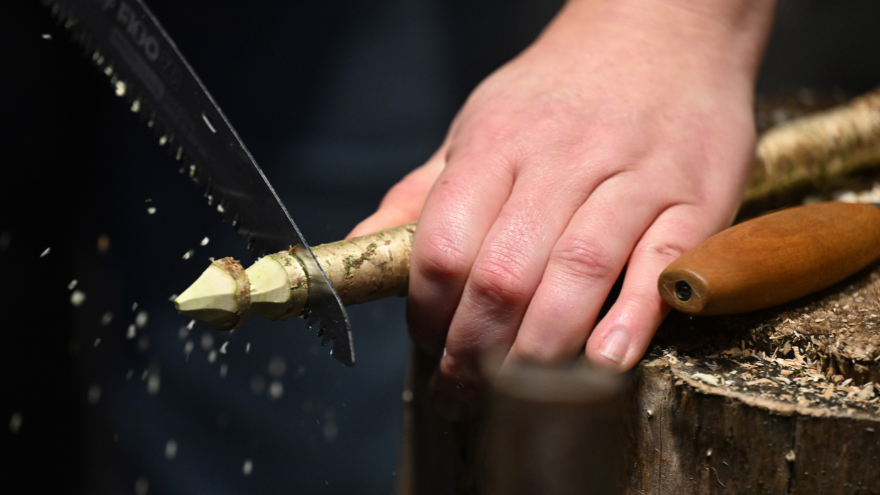
coppice wood working, hand with saw cutting wood


TRACS won the Creative Scotland tender to administer the fund in October last year, with traditional crafts included for the first time as a new addition to the fund.

In 2026, the total fund available is £43k and applications for the first round close on Monday 16 February, with a second round of funding due to open on 6 April and close on 4 May. Awards of up to £1,200 are available (an increase of 20% on previous years), enabling around 18 applicants in each round to be funded the maximum amount.

Applications can be submitted in Gaelic, Scots, and English language. All applicants are required to demonstrate a positive track record in and/or professional commitment to one or more traditional artforms, and awards are decided by a panel of traditional arts and craft specialists.

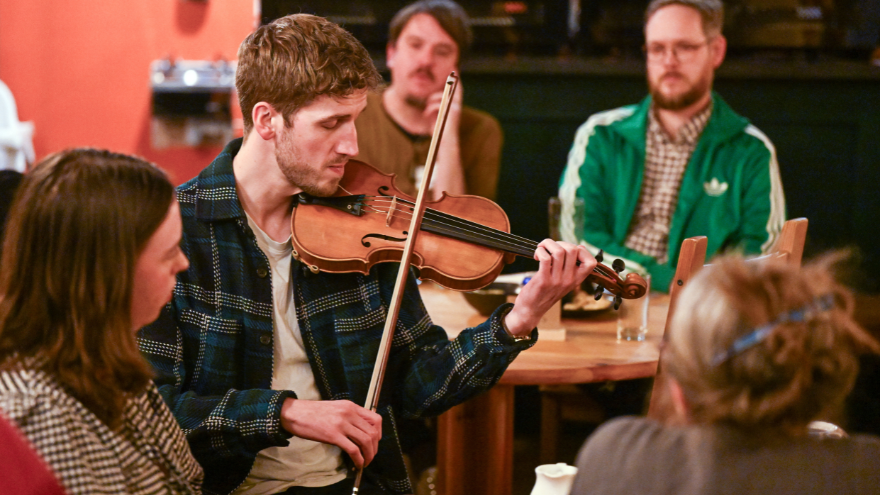
musician playing the violin in cafe style setting

Funding is available for the creation, performance, touring, and showcasing of traditional arts and crafts in Scotland, and for professional development and learning projects. Previous successful projects include music classes and workshops, dance development and collaborations, composition of new music, tours, personal development projects, internships, and festivals. Previous applicants who received awards of between £250 and £1,000 include Sangstream Scots Folk Choir celebrating the heritage of Midlothian miners in song; puirt à beul workshops for Dundee Gaelic Choir;  Cabraich Community Arts’ weekly song and story cèilidhs in Stornoway; storytelling development at Glenesk Folk Museum with the Grampian Association of Storytellers; and the creation of new work in Scottish stepdance by Deiseil Airson Dannsa.

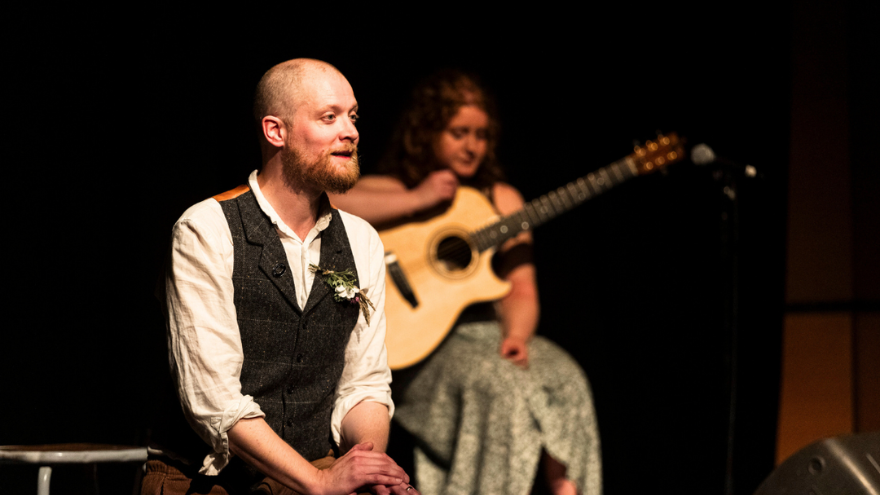
storyteller Daniel Serridge with musician in the background, sitting down telling a story

Steve Byrne CEO of TRACS said: “We are delighted to have been appointed as the new administrators of this important fund. Being able to provide support to artists and organisations at all stages of their development is essential to ensuring that Scotland has a buoyant traditional arts community, and experience shows that a nimble small grants programme like this can make a huge difference to grassroots activity. We look forward to announcing the successful applicants in due course.”

Catriona Hawksworth, Traditional Arts Officer at Creative Scotland said: “The newly redeveloped Traditional Arts and Culture Fund will directly benefit the tradition-bearers and communities upholding Scotland’s many traditions, and we’re delighted that the fund will support traditional crafts for the first time, alongside traditional music, storytelling and dance.

“With increased funding, more traditional artists and practitioners will be able to boost their offerings within their local communities thanks to National Lottery funding. TRACS are expertly placed as a custodian of this crucial funding as champions of Scottish traditions with their invaluable knowledge and networks.”

Helen Voce, panellist representing Traditional Craft said: “The Fund’s recognition of traditional crafts for the first time is welcomed and timely. A supporter of craftspeople in Scotland, including as a volunteer Regional Coordinator of Scottish members of Heritage Crafts, I know the Fund will make a difference to the practice of experienced and emerging practitioners alike. It arrives following a year that saw a number of traditional crafts practised in Scotland listed as endangered (e.g. Shinty Caman Making) and critically endangered (e.g. Highlands & Islands Thatching) on the Red List of Heritage Crafts 2025. And, as communities are poised to submit traditional craft practices to the Crafts Inventory of Living Heritage following the UK’s ratification of the UNESCO Convention for the Safeguarding of the Intangible Cultural Heritage.”

The Traditional Arts and Culture Fund is administered by TRACS (Traditional Arts and Culture Scotland), with support from The National Lottery through Creative Scotland.

More information on the fund and a guide to completing the application form is available at www.tracscotland.org/traditional-arts-and-culture-fund/

Gaelic Language Version

Tagraidhean fosgailte airson Maoin Ealain is Cultair Traidiseanta

Tha Maoin Ealain is Cultair Traidiseanta, air an robh Tasgadh roimhe, a-nis fosgailte airson tagraidhean (19 Faoilleach 2026).Tha a’ mhaoin, air a rianachd le TRACS (Traditional Arts & Culture Scotland – Ealain agus Cultar Traidiseanta na h-Alba), a’ tabhann thabhartasan beaga suas ri £1,200 do luchd-ealain agus buidhnean coimhearsnachd a tha ag obair ann an ceòl traidiseanta, seinn, sgeulachdan, dannsa, ciùird, cànanan dùthchasach, agus dualchas do-bheantainn nas fharsainge.

Bhuannaich TRACS tairgse Alba Chruthachail gus a’ mhaoin a rianachd san Dàmhair an-uiridh, le ciùird thraidiseanta air an toirt a-steach dhan mhaoin airson a’ chiad uair.

Ann an 2026, is e £43k an t-sùim iomlan a tha ri faotainn agus bidh tagraidhean airson a’ chiad chuairt a’ dùnadh air Diluain 16 Gearran, agus bidh an dàrna cuairt maoineachaidh a’ fosgladh air 6 Giblean agus a’ dùnadh air 4 Cèitean. Tha duaisean suas ri £1,200 rim faighinn (àrdachadh de 20% air na bliadhnaichean roimhe), agus tha seo a’ ciallachadh gum faigh timcheall air 18 tagraichean an t-sùim as àirde anns gach cuairt.

Faodar tagraidhean a chur a-steach ann an Gàidhlig, Scots agus Beurla. Feumaidh a h-uile tagraiche dearbhadh gu bheil eachdraidh shoirbheachail aca agus/no dealas proifeasanta a thaobh aon no barrachd chruthan ealain traidiseanta, agus thèid co-dhùnadh a dhèanamh air na duaisean le pannal de dh’eòlaichean ealain is ciùird traidiseanta.

Tha maoineachadh ri fhaighinn airson cruthachadh, cluich, cuairtean agus a bhith a’ taisbeanadh ealainean is ciùird thraidiseanta ann an Alba, agus airson pròiseactan leasachaidh is ionnsachaidh proifeasanta. Am measg nam pròiseactan soirbheachail a bh’ ann roimhe tha clasaichean is bùthan-obrach ciùil, leasachadh is co-obrachadh dannsa, sgrìobhadh ceòl ùr, cuairtean, pròiseactan leasachaidh pearsanta, inntearnasan, agus fèisean. Am measg nan tagraichean a fhuair duaisean eadar £250 agus £1,000 roimhe, tha Sangstream Scots Folk Chòir a tha a’ comharrachadh dualchas mèinnearan Lodainn Mheadhanaich ann an òrain; bùithtean-obrach port à beul airson Còisir Ghàidhlig Dhùn Dè; Cèilidhean òrain is sgeulachdan seachdaineil aig Ealain Coimhearsnachd Cabraich ann an Steòrnabhagh; leasachadh sgilean aithris sgeulachdan aig Taigh-tasgaidh Dualchas Ghleann Easg còmhla ri Comann Sgeulaichean Roinn a’ Mhonaidh; agus a’ cruthachadh dannsa-ceum Albannach ùr le Deiseil Airson Dannsa.

Thuirt Steve Byrne, Àrd-oifigear TRACS: “Tha sinn air leth toilichte gun deach ar fastadh mar rianadairean ùra na maoine cudromaich seo. Tha e deatamach taic a thoirt do luchd-ealain agus buidhnean aig gach ìre den ​​leasachadh aca gus coimhearsnachd ealain thraidiseanta na h-Alba a chumail làidir, beòthail. Tha e follaiseach bho na dh’fhiosraich sinn roimhe gun toir prògram thabhartasan beaga sùbailte mar seo buaidh mhòr air obair aig ìre na coimhearsnachd. Tha sinn a’ dèanamh fiughair ri bhith ag ainmeachadh nan tagraichean soirbheachail ann an àm nach bi fada.”

Thuirt Catriona Hawksworth, Oifigear Ealain Traidiseanta aig Alba Chruthachail: “Bheir Maoin Ealain is Cultair Traidiseanta ath-leasaichte buannachd dhìreach do luchd-giùlain nan traidiseanan agus nan coimhearsnachdan a tha a’ glèidheadh iomadh traidisean Albannach, agus tha sinn air leth toilichte gun toir a’ mhaoin taic do chiùird thraidiseanta airson a’ chiad uair, a bharrachd air ceòl traidiseanta, sgeulachdan agus dannsa.”

“Le barrachd maoineachaidh, bidh e comasach do bharrachd luchd-ealain agus luchd-cleachdaidh traidiseanta togail a thoirt air an obair aca anns na coimhearsnachdan ionadail aca mar thoradh air a’ mhaoineachadh bhon Chrannchur Nàiseanta.” Tha TRACS ann an suidheachadh air leth freagarrach airson an taic-airgid ro-chudromach seo a stiùireadh, a’ tarraing air an eòlas domhainn air traidiseanan na h-Alba agus air neart an lìonraidhean.

Thuirt Helen Voce, neach-pannail a’ riochdachadh nan Ceàirdean Traidiseanta: “Tha fàilte mhòr air an aithneachadh a tha a’ Mhaoin a’ toirt do chiùird thraidiseanta airson a’ chiad uair agus tha e a’ tighinn aig deagh àm. Mar chuideigin a tha a’ cumail taic ri luchd-ciùird ann an Alba, a’ gabhail a-steach mar Cho-òrdanaiche Roinneil saor-thoileach do bhuill Albannach aig  Heritage Crafts, tha fios agam gun dèan a’ Mhaoin diofar mòr dhan obair aig luchd-ciùird eòlach is ùr. Tha e a’ tighinn às dèidh bliadhna anns an deach grunn chiùird thraidiseanta ann an Alba a chomharrachadh mar chiùird ann an cunnart (me. a’ dèanamh Chaman airson Camanachd) agus ann an cunnart mòr (me. tughadh air a’ Ghàidhealtachd is na h-Eileanan) air  Liosta Dhearg nan Ceàrdan Dualchasach 2025. Agus, tha e a’ tachairt aig àm nuair a tha coimhearsnachdan an impis cleachdaidhean ciùird traidiseanta a chur a-steach gu Clàr-innse Dhualchas Beò nan Ceàrdan às dèidh dhan RA Cunnradh UNESCO 2003 airson Dìon Dualchas Cultarach Do-bheantainn a dhaingneachadh.

Tha Maoin Ealain is Cultair Traidiseanta air a rianachd le TRACS (Traditional Arts & Culture Scotland – Ealain agus Cultar Traidiseanta na h-Alba), le taic bhon Chrannchur Nàiseanta tro Alba Chruthachail.

Gheibhear barrachd fiosrachaidh mun mhaoin agus stiùireadh bhidio mu bhith a’ lìonadh an fhoirm tagraidh aig www.tracscotland.org/traditional-arts-and-culture-fund/

News

Carrying it forward: Scotland’s festive foods as Living Heritage

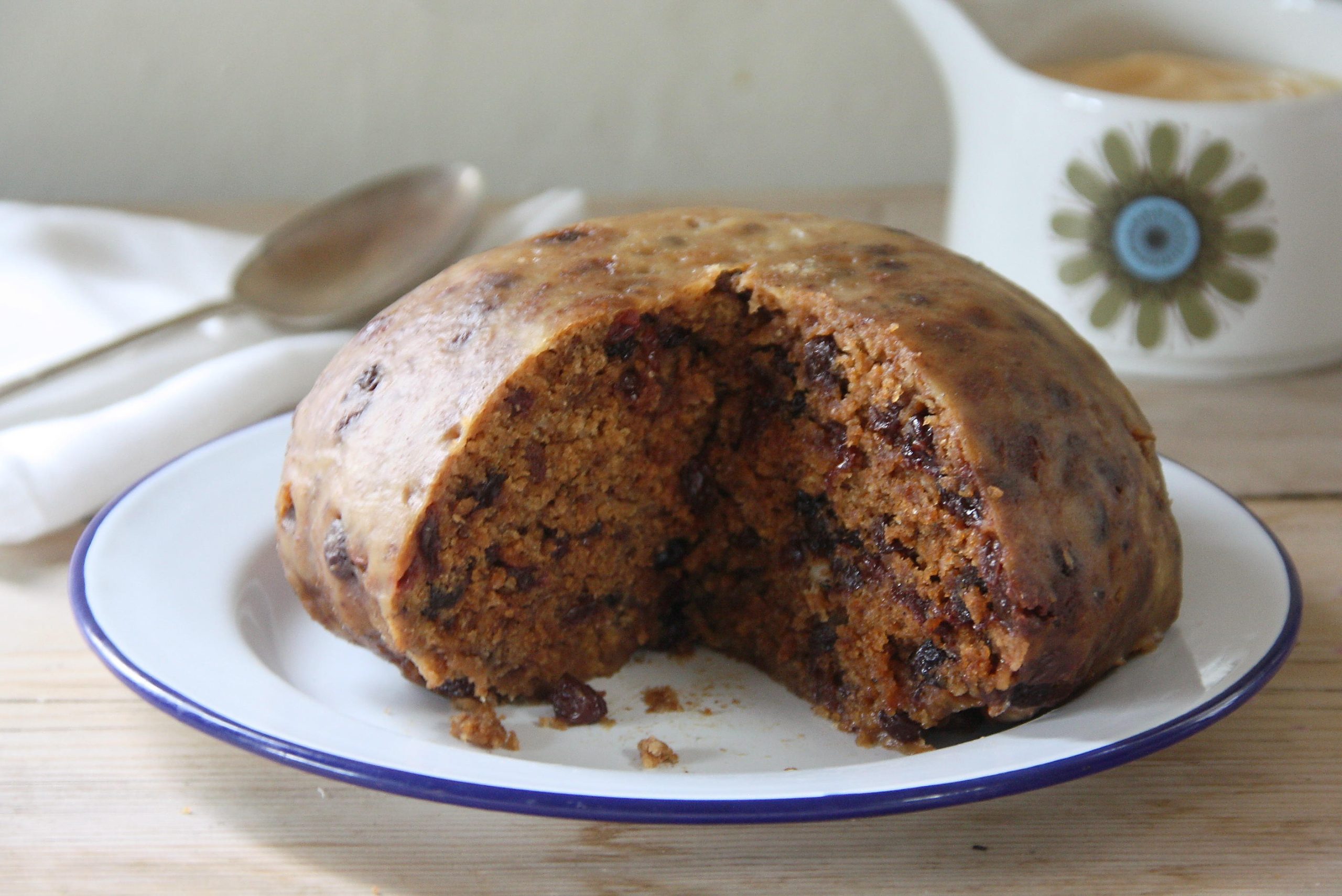
Clootie dumping on a white and blue plate with a slice missing

As we gather ourselves around the fire and the cool mist of December rolls in, many of us slip instinctively into festive ritual. The boxes of décor make their descent from the attic, our special crockery make its annual appearance, and we greet the season with nostalgic flavours that bring back memories and stories.

These small, recurring acts form part of what is known as our Intangible Cultural Heritage (ICH) or Living Heritage – the living practices that shape who we are and how we celebrate both special occasions and the things we do in everyday life. In the UK, UNESCO recognises seven domains of ICH, and among them is Culinary Practices, affirming that the foods we make and share are indeed part of our cultural fabric.

In Scotland, Christmas arrives with an edible array of stories. Each dish has stood the test of time, carried down by families and communities, adapting and being enjoyed by each generation. When we prepare these foods, we’re not just having a meal, we’re tasting the Living Heritage that has been passed on from one generation to the next.

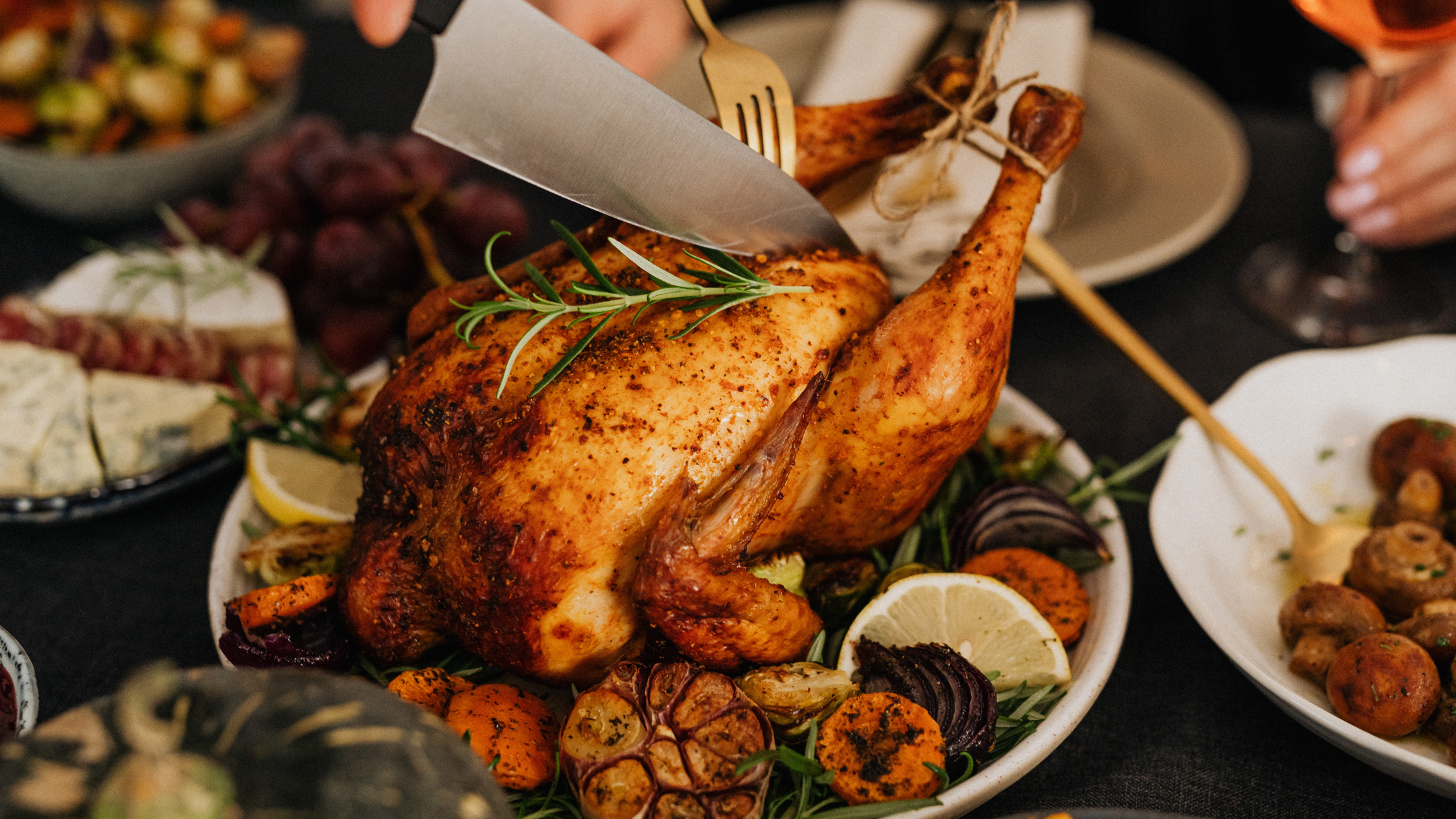
Roast Turkey being carved


Something to start:
Cullen Skink
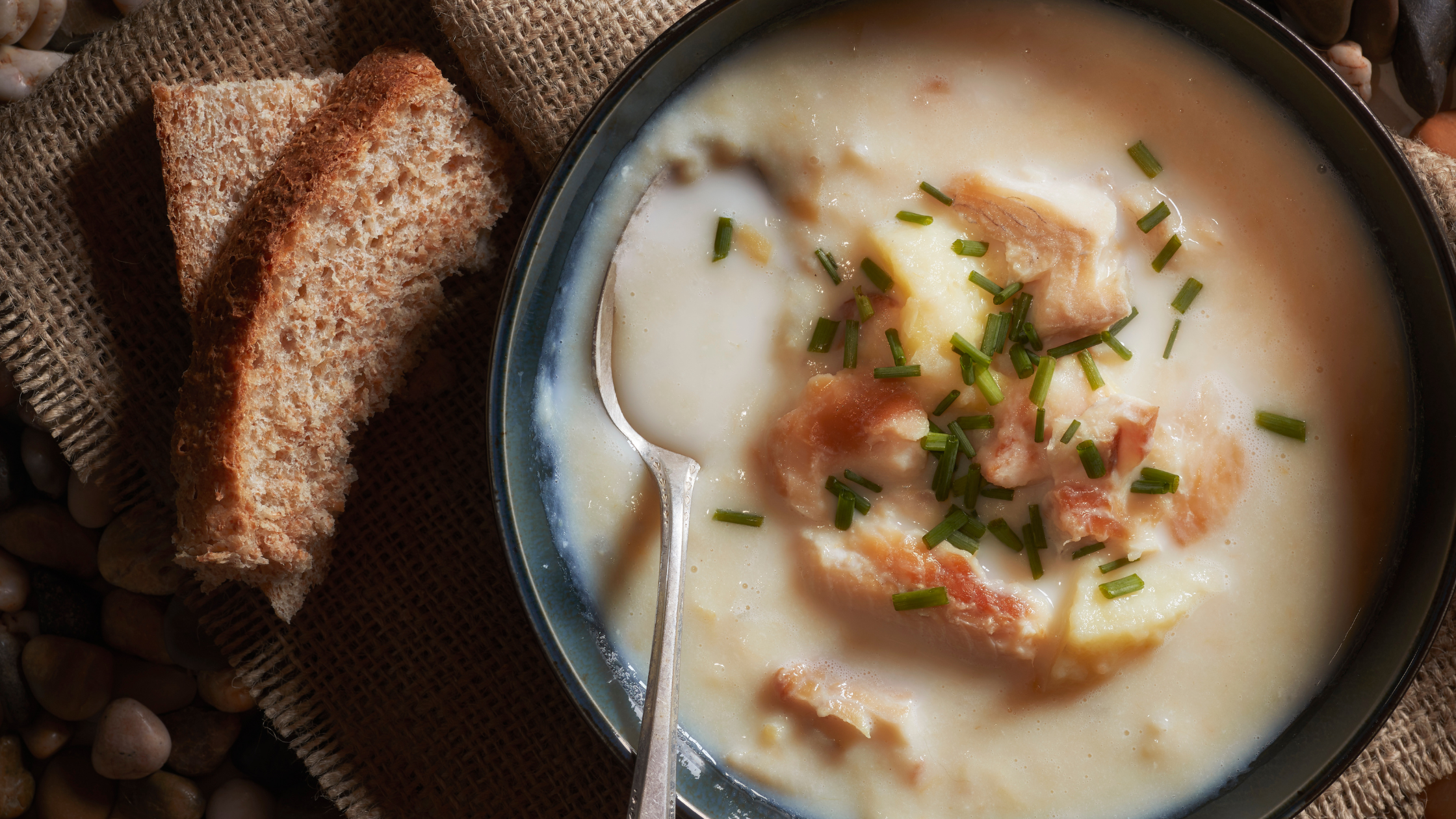
The festive table often opens with a bowl of something warming, and what could be better than Cullen Skink. This creamy soup of smoked haddock, potatoes and onions comes from the fishing town of Cullen, where the sea has sustained lives for centuries. Each spoonful you have is full of tradition – simple ingredients but a comfort food that warms the soul.

A bowl of traditional cullen skink


Heart of the table:
Roast Goose with Clapshot
Before turkey became the roast of choice, roast goose often held the centrepiece at Scottish Christmas feasts. Its rich, savoury warmth pairs naturally with clapshot, the Orkney-born blend of tatties and neeps mashed together into a mouthful of flavour. These dishes arrived long before modern convenience, shaped by what the land and its seasons offered.

Something sweet: Clootie Dumpling
There is a sweet symphony that happens when making a clootie dumpling – tying the pudding in its cloth, lowering it into gently bubbling water, letting it slowly firm into its form. A particular spice might be added by a grandmother, a coin tucked in for luck, and the cloth has often weathered generations of festive celebrations.

Clootie dumping on a white and blue plate with a slice missing


A toast to tradition:
Whisky
And then, of course, the dram. To raise a glass of whisky at Christmas is to participate in a ritual older than the festive season itself. Distilling, sharing, tasting: each is a craft shaped by place, practice, and patience. The drink is not merely enjoyed; it’s recognised as a cultural symbol, telling stories of landscapes, languages, and communities.

Why these traditions matter
Scotland’s festive foods are not just tasty – they’re deeply woven into the country’s Living Heritage. They move with us through time, adapting while keeping their original flavours and meaning. They are part of our ICH, the practices that communities protect, revitalise and pass on.

At TRACS, we work to celebrate and safeguard these traditions so they continue to nourish Scotland’s identity. From storytelling to song, from seasonal customs to the humble recipes that follow us through life, we champion the Living Heritage that shapes our daily life and festive traditions.

So when you gather around the table this Christmas, whether over Cullen Skink, clootie dumpling, shortbread, or a dram of whisky – remember you’re not only enjoying a meal, you’re keeping the Living Heritage of Scotland alive.

News

North Atlantic Song Convention (NASC) 2026 Programme Announced

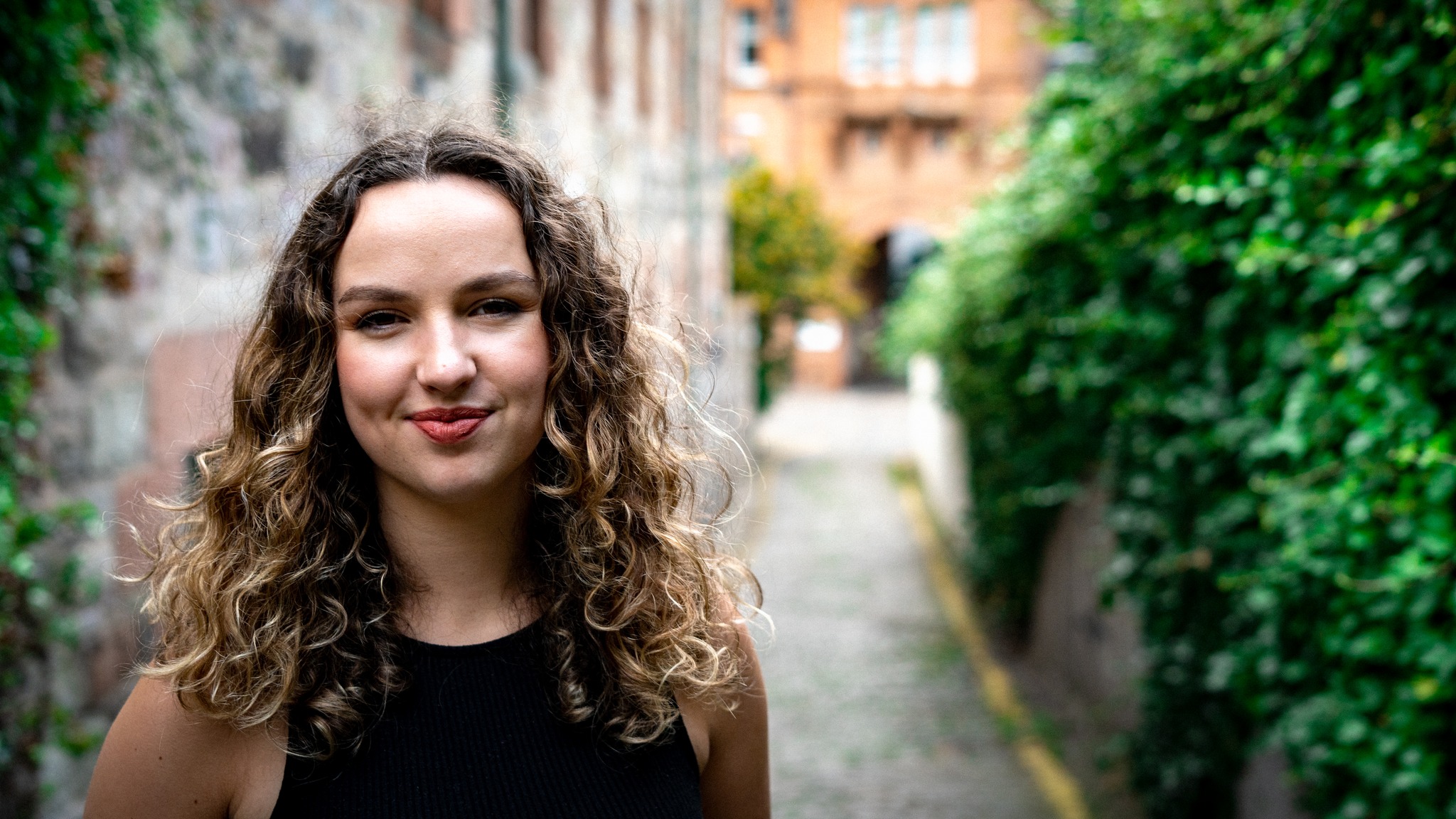
Singer Claire Frances MacNeil stands smiling in a lane surrounding by green foliage.

📷 Claire Frances MacNeil by Martyn MacDonald

Full registration and tickets now on sale for Edinburgh gathering of international traditional singers

The Traditional Music Forum of Scotland (TMFS) and partners are pleased to announce the launch of the North Atlantic Song Convention (NASC) 2026 programme, with registration and tickets now open for all events. The convention will take place from 6 to 8 March 2026 at the Scottish Storytelling Centre, Edinburgh, bringing together singers, scholars, and song enthusiasts from across the North Atlantic region.

NASC is an intimate, international gathering dedicated to the unaccompanied song traditions of the North Atlantic region. Created in 2020 to build meaningful connections between singers, it brings together tradition bearers, students, educators, and enthusiasts from many cultures to learn, share, and collaborate in a supportive environment. With typically 60 to 80 participants, the convention blends workshops, song circles, discussions, and performances, creating a rare space where everyone is valued equally regardless of background or experience.

Guest artists and speakers at NASC 2026 include Synnøve Brøndbo Plassen (Norway), Steve Byrne (Scotland), Óskar Freyr Guðnason (Sweden), Bennett Konesni (USA), Claire Frances MacNeil (Scotland), Angeline Morrison (England), Hazel Marsh (England), alongside three Irish singers supported by Ealaín na Gaeltachta, and two England-based singers supported by Access Folk.

The 2026 convention opens with a keynote by Angeline Morrison, the award-winning English folk singer, songwriter, and researcher whose work explores the intersections of heritage, identity, and the transformative potential of traditional song. Her address will reflect on the universality and healing power of song and consider how shared musical traditions connect people across time, place, and culture.

Registration and tickets are available via the Scottish Storytelling Centre’s online booking system. Delegates may choose a full weekend pass or book individual events. Concession rates are offered, including for TMFS members. Full programme details are available on the NASC website.

Brian Ó hEadhra, Director of NASC and the Traditional Music Forum of Scotland, said:
“We are pleased to launch the NASC 2026 programme, the first under the stewardship of the Traditional Music Forum of Scotland and TRACS (Traditional Arts and Culture Scotland). The expanded board and international line-up reflect our ongoing commitment to inclusive practice and Scotland’s place within our North Atlantic song traditions.”

Ceara Conway, Board Member and representative of Ealaín na Gaeltachta, said:
“Ealaín na Gaeltachta is delighted to support Cathal Ó Curráin, Ellen De Burca, and Órla Ní Fhinneadha, from the Gaeltacht regions to attend NASC 2026. Their involvement strengthens connections between singing communities and highlights the vitality of our Gaelic singing traditions.”

Esbjörn Wettermark, Board Member representing Access Folk at Sheffield University, said:
“Access Folk is proud to support Gemma Khawaja and Femi Oriogun-Williams to take part in NASC 2026. The convention remains an essential space for exchange, reflection, and participation across the North Atlantic singing community.”

Event Details

North Atlantic Song Convention (NASC) 2026
6–8 March 2026
Scottish Storytelling Centre, Edinburgh

Full weekend and individual event tickets available now.
Programme includes concerts, workshops, panels, and song circles.
Concession rates available.

Full access information, event descriptions, and booking links can be found via the Scottish Storytelling Centre website.

NASC is supported by TRACS (Traditional Arts and Culture Scotland) through Creative Scotland Multi-Year Funding.

www.northatlanticsong.com
www.traditionalmusicforum.org
www.tracscotland.org
www.scottishstorytellingcentre.com

www.facebook.com/northatlanticsong
www.instagram.com/northatlanticsong

News

TRACS Appointed Community Support Hub for Scotland’s Living Heritage

TRACS (Traditional Arts and Culture Scotland) is delighted to have been appointed by the UK Government’s Department of Culture Media and Sport as one of the UK’s Intangible Cultural Heritage (ICH) Community Support Hubs. As a Hub, our role is to support communities, practitioners, and tradition bearers to engage with the national Living Heritage Inventory process and to champion the richness of Scotland’s traditional arts and cultural practices.

What this means

As a Community Support Hub, we’ll provide practical guidance, create space for conversation, and help groups and individuals navigate the process of proposing elements for the Scottish ICH Inventory. We’ll also work to raise awareness of the importance of safeguarding our Living Heritage across Scotland and provide practical advice.

Our commitments

  • Two practitioner roundtables bringing together artists, tradition bearers, and cultural organisations to discuss the Living Heritage Inventory process, good safeguarding practices and offer a chance to network with relevant organisations and key partners. These will take place on Tuesday 3rd Feb from 6-7pm and Wednesday 11th Feb from 10.30-11.30am.
  • Weekly ICH Office Hour with the TRACS team, open to anyone who wants to explore Living Heritage, ask questions, or seek support with preparing a Scottish Inventory submission. Our surgeries will run 2-4pm on Mondays from 12th Jan and you can book a timeslot to speak to us online or in person via this link.
  • A series of online workshops for communities across Scotland covering traditional dance, storytelling, music, indigenous languages, and customs, all designed to offer guidance on the inventory process, answer questions, and strengthen understanding of Scotland’s Intangible Cultural Heritage.

We’ll be sharing full details and dates soon – follow us on Facebook, Instagram or LinkedIn to stay in the loop. If you would like to contact us to discuss Living Heritage and how we can support you, please get in touch by emailing intangibleculturalheritage@tracscotland.org

The ICH inventory process is now live, to learn more please visit the official Living Heritage in the UK website: www.livingheritage.unesco.org.uk

Call for Submissions – Living Heritage in the UK

A call for submissions has opened for inventories of living heritage in the UK, asking communities to submit their traditions and heritage practices.

An area of heritage often overlooked, living heritage (or ‘intangible cultural heritage’) includes folklore, performance, customs and crafts that are passed on from generation to generation.

Living Heritage is a broad subject that can include everything from bell-ringing to boat-building, cèilidh to carnival, pantomime to pancake day, highland games to Eisteddfod, Lambeg drumming to long sword dancing, and dry-stone walling to wassailing.

Seven categories will be used for the inventories (although a lot of practices sit in multiple categories): oral expressions; social practices; performing arts; land, nature and spirituality; crafts; sports and games; and culinary practices.

The inventories are being set up by the Governments of the UK, Wales, Scotland and Northern Ireland following the UK joining the UNESCO Convention for the Safeguarding of Intangible Cultural Heritage last year.

The call for submissions will be open for 4 months until Friday 27 March. During this period, there are a range of information sessions, workshops and events, including those from a range of designated Community Support Hubs who can provide help and guidance. More details here www.livingheritage.unesco.org.uk

The inventories will provide a snapshot of all the different types of living heritage across the UK: from popular to niche and old to new. Their purpose is to both raise awareness and to start a conversation about the value of this heritage, paving the way for future efforts to improve its safeguarding.

Read TRACS’s Wee Guide to Intangible Cultural Heritage and find out more about ICH in Scotland.


News

TRACS Is Looking for a Finance Officer

TRACS (Traditional Arts and Culture Scotland) is looking to appoint a Finance Officer to manage its day-to-day financial operations as it moves into the next phase of Multi-Year Funding, delivering the organisation’s Business Plan for supporting the traditional arts sector in Scotland.

This is a key role that will work closely with the Chief Executive Officer and the Board Treasurer to ensure financial discipline and efficiency across the organisation. Reporting to the CEO,  the Finance Officer offers expert financial support and assistance towards the delivery of the organisation’s mission and key objectives as laid out in the Business Plan.

The Finance Officer will be responsible for producing timely and accurate financial information (using Xero cloud accounting), monitoring budgets, tracking grant receipt and spend, analysing costs, and providing insights to support business performance and strategic decision-making. The Finance Officer will regularly attend and report to the TRACS Board Finance & Risk Committee, chaired by the Board Treasurer.

About TRACS

TRACS (Traditional Arts and Culture Scotland) is a co-operative network which champions our shared traditions of music, song, storytelling, dance, crafts, customs and Scotland’s languages.

Bringing together two artform forums – the Traditional Music Forum of Scotland and Scottish Storytelling Forum – as well as networks for traditional dance and crafts, TRACS exists to empower communities across Scotland to discover, develop and practise their unique traditional arts and heritage as part of our everyday life.

TRACS is an accredited Non-Governmental Organisation (NGO) advisor to UNESCO on Intangible Cultural Heritage (ICH), and a founding member of the ICH Scotland Partnership.

TRACS is supported by Creative Scotland through Multi-Year Funding, and the City of Edinburgh Council’s revenue grant scheme.


Key information

  • Hours: 0.6 FTE (21 hours per week)
  • Contract: Fixed term to 31st July 2027, with option to extend, subject to funding
  • Salary: £18,900 (£31,500 per annum pro rata)
  • Location: TRACS office at the Scottish Storytelling Centre, Edinburgh. Some hybrid/remote working by negotiation.
  • Application Deadline: 9am on Monday 5th January 2026
  • Interviews: Week beginning Monday 12th January 2026


Could this be me?

You will be a qualified (ACCA, CIMA, ACA) or part-qualified accountant with an undergraduate degree and at least three years of organisational accounting or bookkeeping experience, ideally gained within an arts or charity setting. You will have strong skills in costing, budgeting, and financial reporting, along with hands-on experience using cloud accounting software – particularly Xero – and working with charity accounts, including restricted and designated funds.

Highly analytical and detail-focused, you’re confident with digital tools, cloud-based workspaces, advanced Excel, and modern filing systems.

You’re an organised self-starter who can manage time effectively, meet deadlines, and communicate financial information clearly to colleagues. Personally, you act with integrity, handle confidential information with discretion, and work well both independently and collaboratively. You’re forward-thinking and able to adapt with ease in demanding situations, ideally with a commitment to Scotland’s traditional arts.


How to apply

  1. Download the full recruitment pack here
  2. Send your CV with a covering letter to recruitment@tracscotland.org

If you require an application form in another format, please email recruitment@tracscotland.org

All applicants must be eligible to work in the UK.

TRACS commits itself to meeting the aims and commitments set out in its Equality, Diversity and Inclusion Policy.  This includes not discriminating under the Equality Act 2010 and building an accurate picture of the make-up of the workforce in encouraging equality and diversity.

TRACS is an accredited Living Wage Employer, committed to paying a wage based on the cost of living to our staff.

Application Deadline: 9am on Monday 5th January 2026

News

Momentum Builds for Scotland’s Living Traditions at the 2025 Intangible Culture Heritage Conference in Perth

Though the morning was frosty, there was a distinct warmth in Perth Theatre on Friday 14 November as artists, community tradition-bearers, academics and cultural leaders came together, both in person and online, for the third annual Intangible Cultural Heritage (ICH) Conference. Organised and funded by the ICH Scotland Partnership – Creative Scotland, TRACS (Traditional Arts and Culture Scotland), Historic Environment Scotland and Museum Galleries Scotland – and supported by Perth & Kinross Council with endorsement from Perth UNESCO City of Craft and Folk Art, the conference focussed on the theme Moving Forward with Living Heritage.

On the eve of Scotland launching the process for developing its own national inventory of Living Heritage practices, the first step in a UK-wide process led by the Department of Culture Media and Sport, communities showed a growing interest in gaining recognition, understanding their traditions, and exploring what sustained practice looks like. The day’s programme reflected that shift from policy toward practice: there was a busy, purposeful buzz in the theatre as practitioners, curators, policymakers and community representatives exchanged experience and explored next steps.

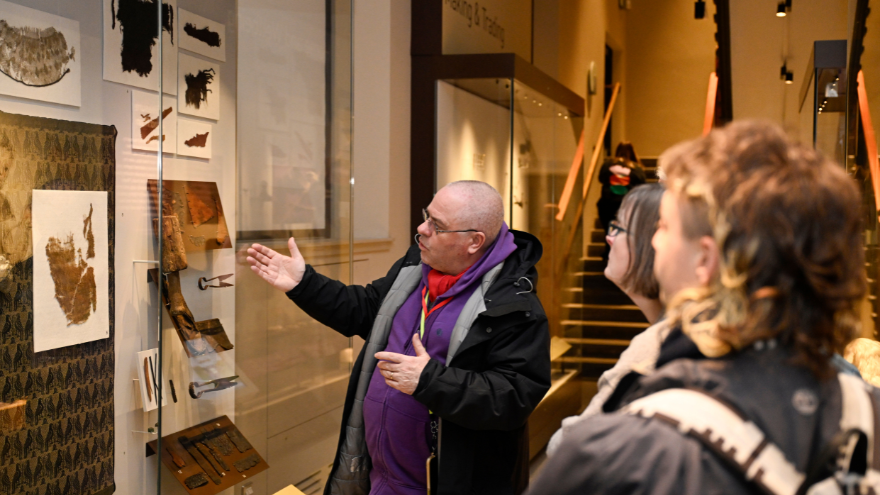
Speakers and contributors included Poppy Jarrat, UNESCO Programme Officer Perth, musician and broadcaster Gary West, and presentations from master kilt-maker Marion Foster, traditional dance specialist Pat Ballantyne, Scots singer and artist Quinie, and storyteller and Traveller Jess Smith. Mark A Hall led a tour of Perth Museum exploring the museum’s role in safeguarding Living Heritage, and organisations including Culture Vannin and GalGael contributed case studies of community-led work.

Steve Byrne, CEO of TRACS (Traditional Arts and Culture Scotland), reflects on the day: “It’s exciting to see how far Scotland’s cultural sector has come in recognising and supporting living heritage. The upcoming launch of the national inventory is just a first step, but it creates real opportunities to connect with communities across the country and celebrate the richness of their traditions on their own terms.

The conference highlighted both the diversity of practice already happening and the curiosity and energy people have, to share and sustain it. The ICH partnership plays a vital role in bringing together government, public bodies, and community organisations to ensure these conversations continue, and that Scotland’s living heritage thrives for generations to come.

The formal programme concluded with an evening ceilidh, which offered a vivid, practical example of ICH in action: people coming together to share songs, music, stories and poetry in the beautiful art and community space at Osteria Bau Bau. It was a reminder that living heritage only thrives when it is practised, passed on, and open for communities to engage with. The evening brought to life the very purpose of the sector’s work, creating the conditions for traditions to continue, flourish, and connect people across Scotland.

You can find out more about Intangible Cultural Heritage and TRACS’s work by clicking this link on our website – What We Do TRACS and Living Heritage.

News

TRACS Is Looking for a Festival Director for the Scottish International Storytelling Festival

image of a tote bag saying "see where the story takes you"

TRACS (Traditional Arts and Culture Scotland) is looking to appoint a new Festival Director to lead the delivery of the Scottish International Storytelling Festival (SISF) from 2026.

Founded in 1989, SISF is the world’s largest celebration of storytelling, anchored in Scotland, a nation of storytellers. SISF takes place in October each year, offering a vibrant programme of live performances, workshops, gatherings, talks and family events in Edinburgh and nationwide.

As part of the Festivals Edinburgh network, SISF has a strong local, national, and international profile. It is recognised as a leading platform for storytelling and traditional arts, and as a key showcase for Scotland’s year-round storytelling activity led by the Scottish Storytelling Forum, one of the members of TRACS.

The core programme of SISF is delivered in Edinburgh at the Scottish Storytelling Centre, with SISF’s national programme encompassing Story Ripple, developed with the Scottish Storytelling Forum, and Go Local, delivered with partners, regional festivals, and venues across Scotland.

Reporting to the TRACS CEO, the SISF Festival Director plays a crucial leadership role, steering and supporting the planning, programming, delivery, evaluation and reporting of the Festival. The new Director will also be responsible for ensuring the Festival’s vigorous and viable future through the formulation of a robust strategic plan, the development of a strong core operational team, and assisting with securing additional streams of funding.

SISF is organised by TRACS, a co-operative network which champions our shared traditions of music, song, storytelling, dance, crafts, customs and Scotland’s languages. TRACS is supported by Creative Scotland through Multi-Year Funding, and the City of Edinburgh Council’s revenue grant scheme. SISF is supported by Scottish Government Expo Funding.

  • Hours: 1.0 FTE (35 hours per week) with the option of 0.8 FTE (28 hours per week) by negotiation
  • Contract: Fixed term, 12 months, with the option to extend for a further year subject to funding
  • Salary: £42,000 per annum (1.0 FTE) (£33,600 at 0.8 FTE)
  • Location: TRACS office at the Scottish Storytelling Centre, Edinburgh. Some hybrid/remote working by negotiation.
  • Application Deadline: 9am on Monday 1st December 2025
  • Interviews: Week beginning Monday 8th December 2025, with potential second interviews the week beginning Monday 15th December.


Could this be me?

The SISF Festival Director will be a strong advocate for oral storytelling in Scotland as a key component of Scotland’s thriving traditional arts sector. You will have significant experience within Scotland’s arts and culture sector, with a clear commitment to fostering creative excellence, encouraging participation, and promoting cultural collaboration.

You will provide strategic and artistic leadership to build on SISF’s established reputation as a meeting place for tradition bearers, emerging voices, and international artists, ensuring it continues to celebrate Scotland’s storytelling traditions and support the key aims of the Scottish Storytelling Forum while creating opportunities for innovation, artistic exploration, and reaching new audiences.

A confident and engaging communicator, you will represent the Festival and TRACS across a range of settings, engaging positively with a range of stakeholders, including the media, board members, staff, Festivals Edinburgh colleagues, funders, local and national government and the general public.

You will have demonstrable experience of successfully curating and delivering diverse arts or cultural programmes within a recognised festival or venue. You will also have a strong track record in project management, business planning, and partnership development.

As an effective leader, you will be able to inspire and motivate a team, fostering collaboration and shared purpose to deliver your creative vision for SISF and contribute to the wider success of Scotland’s traditional arts sector.

How to apply

  1. Download the full recruitment pack here
  2. Send your CV with a covering letter to recruitment@tracscotland.org

If you require an application form in another format, please email recruitment@tracscotland.org

All applicants must be eligible to work in the UK.

TRACS commits itself to meeting the aims and commitments set out in its Equality, Diversity and Inclusion Policy. This includes not discriminating under the Equality Act 2010 and building an accurate picture of the make-up of the workforce in encouraging equality and diversity.

TRACS is an accredited Living Wage Employer, committed to paying a wage based on the cost of living to our staff.

Application Deadline: 9am on Monday 1st December 2025

News

TRACS Traditional Arts Mentoring 2026

TRACS (Traditional Arts and Culture Scotland) is delighted to be delivering another cycle of TRACS Traditional Arts Mentoring, with the support of Creative Scotland and partners.

This programme supports the professional and personal development of traditional arts practitioners in Scotland, reinforcing TRACS’ key work in enhancing the knowledge, practice, access and sustainability of music, song, storytelling, dance, crafts, customs and languages. The cycle will run from January-June 2026 and is led by TRACS Traditional Arts Mentoring Co-ordinator, Jo Miller.

What is mentoring?

Mentoring is a process in which an experienced individual (‘mentor’) helps another person (‘mentee’) to develop goals and skills through a series of time-limited, confidential, one-to-one conversations. This process is known as mentorship.

Mentors also benefit through sharing their own learning, evolving their thinking, developing new relationships, and deepening their mentoring skills.

How does TRACS Traditional Arts Mentoring work?

Two mentorship opportunities for mentees will be offered in the following artforms:

  • Traditional Dance
  • Traditional Music
  • Traditional Song
  • Traditional Storytelling
  • Gaelic language (in combination with one of the above artforms)
  • Scots language (in combination with one of the above artforms)


Successful applicants will have the opportunity to work one-to-one over 6 months with an experienced mentor in their chosen artform. This will be a mutually supportive dialogue, responding to mentees’ individual priorities and respecting different backgrounds and learning styles. Conversations may deal with topics such as creative approaches, professional challenges, confidence, and identifying training needs.

Meetings are likely to be mostly online, but some in-person contact is strongly encouraged. There will also be gatherings involving all participants, providing opportunities for peer learning.

Mentees receive a bursary to cover expenses such as travel and materials.

Am I eligible?

Applicants should:

  • be based in Scotland
  • be early- or mid-career traditional arts practitioners
  • not be in full-time education
  • not be participating in the Scottish Storytelling Forum Apprenticeship Scheme


How do I apply?

To apply for TRACS Traditional Arts Mentoring, please do the following by Monday 8th December 2025:

  1. Complete the application form
  2. Send a concise CV (no more than 2 x A4 pages) to Jo Miller jo@tracscotland.org

If you have any questions, please contact the Mentoring Co-ordinator, Jo Miller jo@tracscotland.org

This programme is supported by Creative Scotland Multi-Year Funding.


News

Ticket Sales Soared… That’s the Story

Multiple sell-outs and packed houses were enjoyed by audiences and participants at this year’s Scottish International Storytelling Festival (22 October to 1 November), which is supported by Multi-Year funding from Creative Scotland and the Scottish Government’s Festivals EXPO Fund.

The festival’s programme, themed under ‘Lights of the North’, included live storytelling, music, art, and song.  Across the core festival programme, which included 39 live performances and workshops at the Scottish Storytelling Centre, over 93% of all available tickets were sold, and an incredible 77% of all events were completely sold out (30 total).  Ticket income increased by 70%, and the number of festival passes bought doubled from 2024.

Highlights included international guest storytellers from the world’s northern arc, sharing tales of Huldufólk (or the hidden people from Iceland), trolls, and the dark northern winters. Plus, there were tales from Scotland’s Travellers; stories about Vikings and selkies; and as the festival nudged closer to Halloween, there were plenty of dark tales inspired by the Brothers Grimm’s original collection of fairytales, tales of Corpse Roads, spooky stories, and mystic legends to be enjoyed.

Even though the main festival has ended, throughout November the festival’s Go Local programme continues in village halls, churches, castles, and venues across Scotland.

Plus, at the University of Edinburgh, on Saturday 8 November, Festival Director Donald Smith and playwright Linda McLean, will join Randall Stevenson and Greg Walker the editors of the Oxford Handbook of Scottish theatre, for Religion and Scottish Drama, at the New College Festival of Books and Belief.  And, also on Saturday 8 and 22 November, Stephen McCabe, who is a storytelling therapist, will be running Folktales for New Scots: Connected with Nature, which are nature-connection walks aimed at migrants and the local community. These walks, starting from outside the Scottish Parliament also include a printing from nature art workshop with Beetroots Collective’s artists Marta Adamowicz and Robert Motyka.

Online audiences can still continue to enjoy more stories by listening to the festival’s podcast series Another Story, hosted by Daniel Abercrombie, Associate Director, Scottish International Storytelling Festival, available on all podcast platforms via: https://podcasters.spotify.com/pod/show/another-story

Plus, there are Recorded Performances of some of this year’s events available to watch on Youtube:

  • The Alan Bruford Lecture ‘A Curious Episode at Balquhidder: Placenames in the North and the Nackens’ with Dr Robert Fell and special guest Shamus McPhee.
  • Storyteller: Martyn Bennett and the Travellers’ Stories with James MacDonald Reid, Gauri Raja, Jess Smith and Gary West.
  • Open Hearth storytelling session with storytellers Grace Banks, Johan Sandberg McGuinne, Jackie Ross and musician Tom Oakes.

Donald Smith, Director, Scottish International Storytelling Festival said:

“The storytellers and musicians excelled; packed audiences loved it; workshops were full of fresh talent. We all made new friends. I’ve worked in a lot of festivals over fifty years, but this one will resonate for years to come – it was the pure drop.”

Catriona Hawksworth, Traditional Arts Officer at Creative Scotland said: “The Scottish International Storytelling Festival’s resounding success is a testament to the richness and diversity of storytelling it brings to audiences – from the heart of Scotland to voices around the globe.

“With vital support from the Scottish Government’s EXPO funding, the festival has flourished as a beacon of international collaboration and socially engaged storytelling. By celebrating intangible cultural heritage, it’s inspiring communities and setting a vibrant example of how traditions can be shared, honoured, and reimagined across Scotland.”

The dates of next year’s Scottish International Storytelling Festival are 21 to 31 October 2026.

News

Dark Tales for Halloween

As Halloween approaches the tales being told at this year’s Scottish International Storytelling Festival begin to take a darker turn…

On Halloween night (Friday 31 October), storyteller Anna Lehr will present her new storytelling show Dazwischen (Inbetween) which is inspired by the original tales of the Brothers Grimm, especially the story of Godfather Death.

Anna Lehr with the ‘Death Puppet’. Dazwischen premieres at 8pm on Friday 31 October at the Storytelling Centre in Edinburgh. Photo credit Jim Dunn

Events on the 31 October:

Anna Lehr’s new tale Dazwischen, about death, birth and what lies in between, is loosely based on the Brother’s Grimm fairytale Godfather Death. It will be performed with German songs, poems, traditions and Anna dancing with Death itself, in the form of a puppet created by artist and wood carver Justina Kasponyte. Anna Lehr worked as an actress for over ten years in her native Germany and is an expert in performance-based interactive and educational storytelling. Her new tale Dazwischen was originally commissioned for the 2024 festival and is supported by the Scottish Government’s Festivals EXPO Fund.

Also, taking place on 31 October, is The Bewitching Season with guest storyteller Suse Weisse, who is one of Germany’s leading storytellers with a special interest in telling and adapting the tales of the Brothers Grimm, that she grew up with as a child. This storytelling discussion at the National Library of Scotland is presented in association with the Goethe-Institut and takes audiences on a journey through the intersections of folklore and the natural world, at a time when the mystical and natural come close, and the northern winter begins.

Guid Crack Storytelling Session at The Waverley Bar in Edinburgh. This will be a Samhuinn hosted by storyteller Fiona Herbert who will lead a session of spooky stories, and invite audiences to share their own.

Over the rest of the weekend there will also be:

A workshop on Mortality and Making (Saturday 1 November) with storyteller Beverley Bryant who is also a celebrant and death educator. Beverley will be sharing some traditional death stories and ask participants to discuss death, which is often seen as taboo for storytellers. All whilst participants get hands-on and decorate a cardboard coffin and learn the craft of weaving a willow coffin.

To the Ends of the Earth with Monica Madas and Erin Farley which tells the story of Triduana who is part of a small group of missionaries determined to share the Christian faith by taking Saint Andrew’s bones ‘to the ends of the earth’. Triduana’s voyage into unseen waters and mythologies is told through story, song and puppetry.

The Corpse Road with storyteller Daniel Serridge and musician Heather Cartwright which follows the rise and fall, and the twists and turns of those whose final journey was made along the ancient corpse roads. This session will be a mix of stories and songs written about the characters who travelled along these roads on their final journey to the grave.

Finally, as we head into November, there is a Family Samhuinn celebration with the Beltane Fire Society on Sunday 2 November, where families can drop-in at the Storytelling Centre during the day for facepainting, storytelling and songs.

Then, on Wednesday 5 November Moonspinners, with storytellers Bea Ferguson, Selina Graham and Heather Yule, returns, for another full-moon celebration, alongside host storytellers Claire McNicol and Linda Williamson. Together they will be sharing moon myths, lunar legends and cross-cultural stories about creation, fertility, cosmic joy, transformation, death and rebirth. Moonspinners takes place under the energy and influence of November’s Beaver Moon and the session will begin with a community meal in the café at 6pm of haggis neeps and tatties on a pay-what-you-can basis with all donations going to support the Edinburgh Food Project. This will be followed by storytelling in the theatre, and then an informal social and more conversational session in the Storytelling Court.

The Scottish International Storytelling Festival runs until 1 November thanks to support from the Scottish Government’s Festivals EXPO Fund and Multi-Year Funding from Creative Scotland. The Festival’s Go Local programme runs throughout October and November and includes over 60 of events taking place in village halls, pubs, cafes and gardens across Scotland, from the Borders to Shetland and the Western Isles.

To purchase tickets and browse the full programme, visit sisf.org.uk