News

Scotland’s Living Heritage Takes Centre Stage at Discovery Day

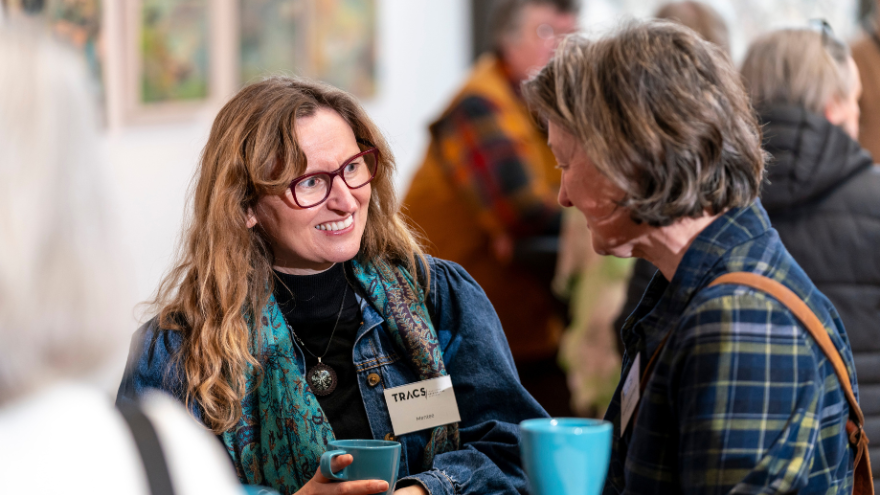
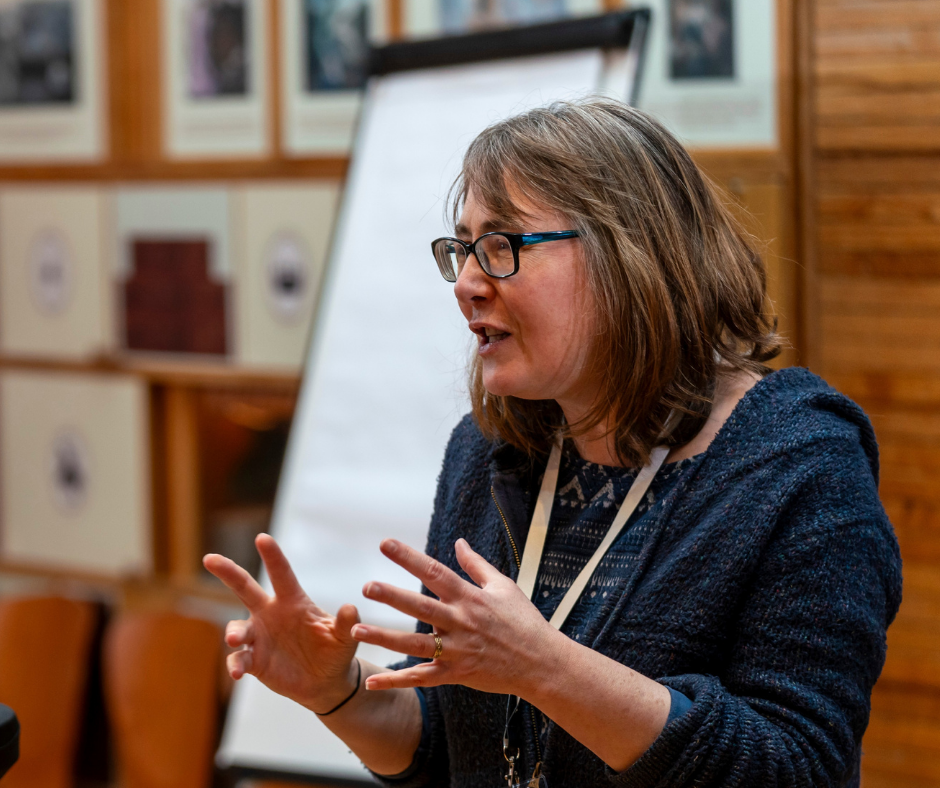
Traditional arts, crafts, music, storytelling and community practice will come together in Edinburgh this May as TRACS (Traditional Arts and Culture Scotland) launches its Living Heritage Discovery Day at the Scottish Storytelling Centre.

Taking place on 10 May 2026, the free public event will celebrate Scotland’s Intangible Cultural Heritage (ICH) – the traditions, skills, customs and cultural practices passed down from generation to generation and celebrated in our daily lives.

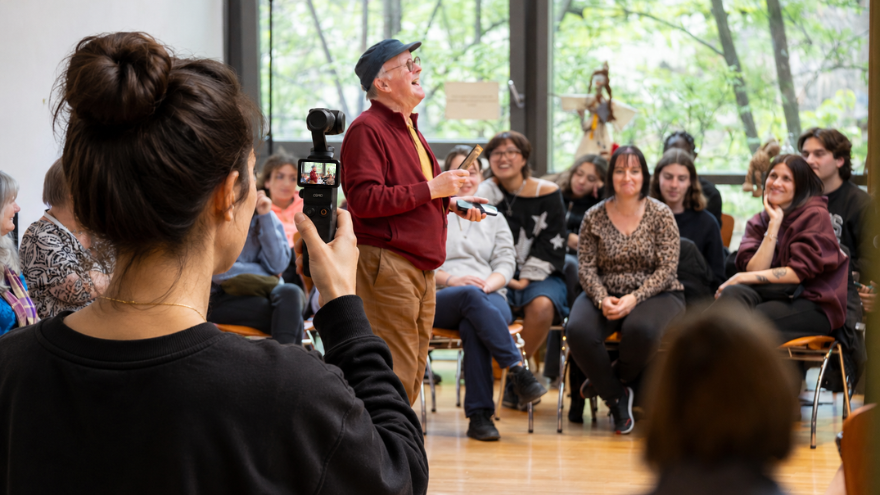
Organised by TRACS, the day-long programme invites people of all ages to experience Scotland’s living traditions first-hand through workshops, performances, conversations and participatory activities.

Held at Scottish Storytelling Centre, the event reflects growing national momentum around the recognition and safeguarding of Living Heritage following the UK’s ratification of the UNESCO Convention for the Safeguarding of Intangible Cultural Heritage in 2024 and the first call for submissions to the UK’s Inventories of Living Heritage.

Visitors can explore a Living Heritage Fayre featuring organisations such as as Creative Scotland, Museums Galleries Scotland and Heritage Crafts UK, as well as practitioners and community groups working across traditional dance, music, storytelling, crafts and folklore. A series of “Come & Try” sessions will offer hands-on introductions to traditional practices, encouraging people not just to observe heritage, but actively participate in it, from Scottish Country Dance to traditional cordage making and beginners sessions in Scots and Gaelic, as well as a chance to try the clàrsach.

A highlight of the programme will be a special afternoon event with Irish folklorist and digital archivist Michael Fortune, whose acclaimed folklore.ie project documents vernacular traditions, oral history and everyday cultural life across Ireland. His appearance will explore shared approaches to safeguarding tradition in Ireland and the role communities play in sustaining cultural memory.

The day concludes with a traditional House Cèilidh, an informal gathering of shared music, song and storytelling designed to embody Living Heritage in action: participatory, intergenerational and community-led.

The event also marks an important moment for Scotland’s developing Living Heritage movement. TRACS was recently appointed by the Department for Culture, Media and Sport as one of the UK’s official Community Support Hubs for Intangible Cultural Heritage, helping communities engage with the emerging UK-wide Living Heritage Inventories.

Living Heritage, also known as Intangible Cultural Heritage, encompasses practices ranging from storytelling and seasonal customs to crafts, social rituals, traditional games, languages and food traditions. Rather than being confined to museums or archives, it exists through active participation and shared community knowledge.

The Living Heritage Discovery Day is free to attend and open to all, with drop-in activities running throughout the day, part of Edinburgh Tradfest.

Living Heritage Discovery Day

Sunday 10 May 2026 | At the Scottish Storytelling Centre

The Day’s Schedule in brief

  • Living Heritage Fayre, 10am-1.30pm
  • Come & Try Sessions, 10:30am-1:30pm
  • An Afternoon with Michael Fortune of folklore.ie, 2pm-3:30pm
  • TRACS House Cèilidh, 4pm-6pm

More information can be found on the TRACS (Traditional Arts and Culture Scotland) website.

News

Nature Writing Competition Calls for Stories that Highlight Changing Seasons

Scotland’s biggest annual nature writing competition is underway for its third successive year.

Words of the Wild, organised by the Scottish Wildlife Trust in association with the Scottish International Storytelling Festival, invites budding writers to share their stories about Scotland’s wildlife and wild places.

This year’s theme is “Changing seasons” as entrants are encouraged to write about nature’s most notable moments throughout the year – from the first budding bluebells in spring to the influx of wintering birds such as whooper swans, waxwings and pink-footed geese.

The theme also reflects the impacts that climate change is having on our seasons, with many natural processes being knocked out of sync by rising temperatures. The summer of 2025 was the warmest on record in the UK, while mild days in early spring are bringing insects out of their hibernation-like state long before the chicks that feed on them have hatched.

Jo Pike, Chief Executive of the Scottish Wildlife Trust, said: “Words of the Wild is fast becoming a highlight of our year and this time around we’re focusing on the moments in nature’s calendar that mean the most to you. But we also want to hear about how climate change is affecting the seasons and the wildlife that depends on this cycle. Perhaps you’ve noticed tadpoles emerging earlier in spring or uneaten berries dropping from trees in autumn.

“Following the success of our previous competitions, I have no doubt that this year’s theme will resonate with people of all ages and backgrounds, bringing to life another collection of powerful stories.”

Words of the Wild is supported by notable names in literature and conservation, with poet and former Young Makar, Eve McIntosh, and BBC Radio Scotland’s Out of Doors Presenter, Rachel Stewart both on the judging panel. Over £2,000 worth of wildlife prizes are available for this year’s winners, with prizes generously donated by NHBS, Elliot & Thompson, Wild Fungarium and others.

In 2025, the competition’s theme was “From source to sea”, attracting nearly 900 entries from all across the UK. Winners included Faith MacLachlan, aged 12, from Lewis, who composed a Gaelic poem about the wildlife and waves on a secluded beach, and Finola Scott from Kirkintilloch, whose Scots entry took inspiration from Scotland’s folk tales and spectacular coastal landscapes.

Dr Kenny Taylor, Chair of the Scottish Wildlife Trust and Words of the Wild judge, said: “The seasons have a profound impact on the way we live our lives. For some, seeing a swallow is the first sign that spring has truly arrived, while many of us look forward to the stunning array of colour that washes over our woodlands every autumn. But it can’t be ignored that as our planet warms, our seasons are changing. I’m intrigued to see how these experiences inspire this year’s entrants.”

Entries to Words of the Wild can be up to 1,000 words in the form of poetry, short stories, journalistic articles, essays, letters or even song lyrics and can be written in English, Scots or Gaelic. Adult and junior finalists from each language category will be featured in a special exhibition which will be displayed at various locations throughout autumn and winter. The winners will be announced at the Scottish International Storytelling Festival in October.

Daniel Abercrombie, Director for the Scottish International Storytelling Festival, said: “We’re delighted to be working with the Scottish Wildlife Trust again on the Words of the Wild nature writing competition and are looking forward to hosting the winners’ announcement as part of our festival this autumn, which is fittingly themed ‘Bird and Beast’. We heartily encourage storytellers of all disciplines and backgrounds to get involved and we’re excited to see the creative sparks emerge!”

For more information, including details on how to enter, visit the Scottish Wildlife Trust website: https://scottishwildlifetrust.org.uk/wordsofthewild/competition/

News

Evening and Weekend Duty Manager, Scottish Storytelling Centre

An exciting opportunity to join our Duty Management team at a vibrant visitor attraction and arts venue in central Edinburgh. In the role you will provide an excellent standard of customer service as the first point of contact for all visitors to the Scottish Storytelling Centre. You will work with colleagues and partners to provide a warm welcome and high standard of customer care to all visitors to John Knox House and the Scottish Storytelling Centre.

As well as having the ability to provide a high standard of customer service, you must also be able to demonstrate excellent communication, and interpersonal skills will have the ability to manage a variety of tasks under pressure.

You will work initially 20- 35 hours per week on a flexible rota which will mainly be evenings and weekends.

The Scottish Storytelling Centre is a partnership between The Church of Scotland and TRACS (Traditional Arts and Culture Scotland). The SSC is a vibrant arts venue with a seasonal programme of live storytelling, theatre, music, exhibitions, workshops, family events, and festivals.

  • Title: Evening and Weekend Duty Manager, Scottish Storytelling Centre
  • Salary: £16.50 per hour
  • Location: Edinburgh
  • Hours: Part Time, 20 hours per week until end of July, Full time 35 hours per week, 3rd – 31st August 2026.
  • Closing date: Monday 4th May 2026, 12:00pm

Full details on how to apply and a job description, can be found by clicking the link below.

Job Application Pack

News

Round 2 of the Traditional Arts and Culture Fund is Now Open

We’re pleased to share that Round 2 of the Traditional Arts and Culture Fund is now open for applications.

Thank you to everyone who applied for Round 1 – we were blown away by the number of applications. It was heart-warming to see such a wide and distinctive range of traditional arts being practised across the country. Congratulations again to the 19 successful applicants, who are now bringing their projects to life and supporting traditional arts and culture in their communities.

The fund supports traditional artists and organisations to create, perform, tour and showcase work, as well as develop professional skills and learning opportunities. Grants of up to £1,200 are available.

The deadline for Round 2 applications is Monday 11 May 2026.

If you’re working in traditional arts and culture and have a project you’d like to develop, we encourage you to apply.

Find full details, including eligibility and how to apply, here:
https://tracscotland.org/traditional-arts-and-culture-fund/

News

Scottish International Storytelling Festival 2026 – Invitation for Storytelling Proposals

Storyteller Showna Cowie at the Scottish International Storytelling Festival

The Scottish International Storytelling Festival (SISF) will take place from Wednesday 21st to Saturday 31st October 2026. This year, we open up rich relationships between storytelling and the natural environment, exploring the traditional and contemporary ties between humans, birds and the animal world through our theme ‘Bird and Beast‘.

SISF now invites proposals for consideration to feature in the festival programme aligning with this year’s theme and meeting SISF’s core purpose, aims and values.

About SISF

SISF explores the traditional art of live, oral storytelling in contemporary society. It takes place annually each October in Edinburgh and across Scotland, with local community events extending through November.

The festival encourages collaboration with other artforms, including music, song, dance and traditional crafts. It also works in partnership with other festivals and cultural organisations.

The programme includes adult events, family events, workshops and digital offerings.

SISF is committed to:

  • Equality, Diversity and Inclusion
  • Scotland’s Languages, including BSL
  • Cultural Safeguarding
  • Environmental Sustainability
  • Fair Work

Event Proposals

Storytellers are invited to submit a storytelling event proposal aligning with this year’s theme and meeting SISF’s core purpose, aims and values (as outlined above). If selected, the event will be featured in the 2026 festival programme and presented in Edinburgh and/or another local venue in Scotland.

Submitting your Proposal

Eligibility

Creative practitioners of 18 years of age or over, who are based in Scotland and are rooted in the traditional artform of live, oral storytelling.

Collaboration with other artforms and/or international artists is also welcomed, but the lead applicant must be based in Scotland.

How to apply

  • Eligible artists (see above) are invited to make one submission for the SISF Programme
  • Please complete and submit the Google form (below) by Tuesday 5th May:
    1. Preview of questions (PDF) – for information only
    2. SISF 2026 Invitation for Storytelling Proposals (Google Form)
  • We ask all applicants to complete our Equalities Monitoring Form. The form is completely anonymous and helps us understand more about the diversity of the people who apply to take part in SISF.
  • You will receive an acknowledgement email from the Festival team as soon as possible, confirming receipt of your proposal.
  • All applicants will receive a final decision on their proposal by Friday 29th of May.

Access

We will provide any required support to make this process as accessible as possible, including verbal or BSL submissions via video. Please address any access requirements to storytellingfestival@tracscotland.org

Enquiries

Any general enquiries should be addressed to storytellingfestival@tracscotland.org in the first instance.

News

Bellows Bagpipes as Scottish Living Heritage

I have been fascinated by bagpipes for as long as I can remember. It began, I’m told, when, as a three-year-old boy growing up in the Perthshire town of Pitlochry, I used to demand to be taken down to the main street every week in the summer months to watch the local pipe band, the Vale of Atholl, march through the town to entertain locals and tourists alike. I can’t recall whether it was the sight, the sound, or (more likely) the combination that stirred something within me, but whatever it was, from then on I was hooked! When I was six years old, my mother saw an advert in the local newsagent’s window advertising free lessons being given by the band, and asked if I wanted to try it. I certainly did! The teacher was Allan ‘Piper’ Cameron, at the time recently retired as pipe major of the Vale of Atholl, but who had agreed to stay on to help teach the next generation coming through.

First Lessons with Allan ‘Piper’ Cameron

I very well remember that in my first lesson, my pinkie finger couldn’t quite reach the bottom hole of the practice chanter. Allan suggested that I take the chanter home anyway, and see how I got on. If I still couldn’t reach by the following week, then we’d leave it for a year and then try again. I spent the week stretching that finger like nobody’s business! Come the following Wednesday, all was well, and my piping career began! By the age of eight I was ready to move up from the practice chanter to the full bagpipes, and the following year I joined the band. It was the beginning of a wonderful journey of music and friendship, as the band, full of young players like myself, began to climb up through the competition grades and within a decade we were crowned both Scottish and European champions and were ranked within the top three pipe bands in the world. We toured throughout Europe, Canada, the USA and we even had a trip to Indonesia. They were great times and we made wonderful memories.

A Lost Tradition

All of this, however, involved the Great Highland Bagpipe – the loud, strident three-droned instrument which for several hundred years had become synonymous with Scotland. That was hardly surprising, as this was the only form of Scottish bagpipe that existed at the time. It hadn’t always been that way: smaller and quieter forms of the instrument, such as smallpipes, Border or Lowland pipes and reelpipes, all driven by bellows rather than by human lungs, had been part of the musical landscape for several centuries in the past, but had gone out of fashion and had become virtually extinct by the early twentieth century. There may have been some sets lurking under beds and tucked away in lofts, but even the few that had found their way into museums were usually mis-labelled as either uillean pipes from Ireland or Northumbrian pipes from the north of England. But in fact, they were neither: they were actually the last surviving remnants of a lost tradition.

The Revival Begins

The early 1980s saw the beginnings of a revival of these smaller, bellows-blown bagpipes here in Scotland, and the resurgence of interest in them has been immense in the intervening years. I got my first set soon after the revival began, and I’m lucky enough to spend a lot of my time now teaching these across Scotland, in Europe and in many parts of the USA. They are gaining in popularity all the time and there can be no doubt that the revival has been a major success, and these bellows pipes have taken their place once again in the carrying stream of living heritage.

The pitch and relatively low volume of Scottish bellows pipes make them more suitable for playing with other instruments than their louder Highland cousins, and so they have been enthusiastically welcomed into the wider traditional music scene both here in Scotland and well beyond. The fingering style is compatible with that of the highland pipes, although a few subtle adjustments to technique can certainly help to get the best out of these instruments. Because this was a severed tradition, a good deal of the detail regarding how they might have been played before their disappearance has been lost, and our knowledge and understanding of exactly how techniques, style, tempos and repertoire were transmitted between generations is scanty to say the least. That can be refreshing, however, as it means there are no rules that must be obeyed!

It is wonderful to see so many young people taking up the Scottish bellows pipes, and to witness them taking the instrument in various musical directions. Teaching and transmission is alive and well once again, with an emphasis on both ear-learning and use of written scores. There is a healthy corpus of new compositions emerging, while older manuscripts and collections are not being forgotten by any means. They are being performed in pub sessions, in folk bands, in dance halls and on major concert stages, their versatility allowing them to add positively to many musical genres.

In short, the bellows bagpipe tradition of Scotland is no longer reviving, but rather it has revived. It is an active, thriving, living tradition once more, and in my view, it is now here to stay!

Living Heritage Update: The Scottish Piping Centre has recently submitted ‘Scottish Bagpiping’ to the UNESCO UK Living Heritage list in the ‘Performing Arts’ category of Scotland’s Living Heritage. To see what’s been submitted, you can visit livingheritage.unesco.org.uk


Written by Gary West. 

News

Daniel Abercrombie Appointed as New Festival Director

Imge of Daniel Abercrombie standing in Sandeman House Garden

Today, on World Storytelling Day (Friday 20 March), TRACS (Traditional Arts and Culture Scotland) is delighted to announce the appointment of Daniel Abercrombie as the new Director of the Scottish International Storytelling Festival. An experienced creative arts producer deeply embedded within the storytelling community in Scotland, Daniel will take up his appointment from April 2026.

Daniel has been Associate Director of the Scottish International Storytelling Festival (SISF) for the past five years, and at the forefront of the much-loved Scottish Storytelling Centre since 2010. He has been a key figure in driving and shaping the current resurgence of interest in traditional and contemporary storytelling, and his work, just like a traditional cèilidh, is rooted in shared creativity, partnerships and collaboration.

Daniel Abercrombie standing in the Storytelling Court at the Scottish Storytelling Centre

Under Daniel’s guidance, the Scottish Storytelling Centre’s Edinburgh Festival Fringe programme has developed into a thriving platform for storytellers and trad-artists, becoming a must-see programme of first-class creativity each August. In 2013 Daniel was also part of the team that led the creation of Edinburgh Tradfest.

Raised in Edinburgh, Daniel has a deep understanding of the city’s festivals, but also how the SISF reaches across Scotland and absorbs international friendships. As part of his appointment he will join the Directors of Festivals Edinburgh bringing with him a wealth of experience in working with a wide range of artists and cultural organisations and an educational background in cultural and literary tourism.

SISF was founded in 1989 by former director Donald Smith to promote storytelling, nurture new talent and celebrate community. Today, the festival welcomes audiences in excess of 40,000 participants and connects with new and well-known storytellers from all across Scotland and in other parts of the world. SISF is the world’s largest annual celebration of storytelling and is organised by TRACS (Traditional Arts and Culture Scotland), the national network for traditional arts in Scotland. In 2026 the festival will run from 21 to 31 October.

Daniel Abercrombie, new Director of the Scottish International Storytelling Festival said:
It’s a great joy to be tasked with continuing the great work of the Scottish International Storytelling Festival. I have seen first hand the natural evolution of the festival into the thriving cultural community force it is now and I look forward to being a steward, celebrant and advocate for the great stories, storytellers and traditional artists that make our festival a light in a world in need of stories.

Beverley Bryant, Chair of the Scottish Storytelling Forum said:
Daniel absolutely understands the importance of storytelling; both the tradition and culture we are preserving and the need for storytelling in contemporary settings. He is a passionate advocate of the art form and of the Scottish arts scene more broadly. It will be exciting to see the SISF develop in new ways under his direction.

Steve Byrne, CEO of TRACS, who led the recruitment process, commented:
I am delighted to welcome Daniel to the TRACS team after many years of working alongside him in partnership, having long admired his innovative programming work at the Scottish Storytelling Centre. His track record speaks for itself – he is an outstanding candidate whose commitment to traditional arts is first rate. I look forward to seeing SISF flourish under his leadership.

News

Essential Skills Workshops for Traditional Musicians Head to New Galloway this May

Katch Holmes sits in a red jumper and black coat in front of a green hill, with blue sky and clouds in the background.

The Traditional Music Forum of Scotland is delighted to be heading to CatStrand in New Galloway in May for more Essential Skills Workshops for Traditional Musicians, this time with festival organiser, folk music agent, and creative producer Katch Holmes.

Our industry-focussed workshops are designed to offer invaluable insights and practical guidance for musicians and organisations working within traditional music in Scotland.

Whether you want to learn how to record and release your music, craft a successful funding application, improve your self-promotion, learn how how to book gigs, or take control of your finances – these workshops are designed with your professional development in mind.


Funding & Finances for Musicians

Sat 9 May | 10am (3hrs) | CatStrand, New Galloway

For individuals and organisations, this interactive workshop will take you through important considerations for developing a funded project, how to budget it, writing the application, and keeping track of finances once you have secured the funding.

More info and booking


Self-Promotion & Booking Gigs

Sat 9 May | 2pm (3hrs) | CatStrand, New Galloway

In this workshop that focuses on self-promotion and booking gigs, participants will take a look at who they are as an artist, how they promote themselves, what they want to achieve, an understanding of a good biography, and some kind of plan for next steps.

The workshop will also consider practical steps to booking gigs, such as how to build contacts, approach promoters, negotiate fees and costs, and more.

More info and booking


Pricing

Full Price: £16.17 (£15 + £1.17 booking fee)
TMFS Member: £8.09 (£7.50 + £0.59 booking fee)
Student: £14.01 (£13 + £1.01 booking fee)
Under 26s: £14.01 (£13 + £1.01 booking fee)
d/Deaf or Disabled Person: £14.01 (£13 + £1.01 booking fee)
Personal Assistant: £0.00
(Free personal assistant ticket available, if required)

TMFS members can enjoy an exclusive 50% discount on all workshops.

These workshops are supported by TRACS (Traditional Arts & Culture Scotland) through Creative Scotland Multi-Year Funding.

Become a member of the Traditional Music Forum of Scotland (TMFS).


View all the Traditional Music Forum of Scotland’s workshops:

www.traditionalmusicforum.org/workshops2026

News

Essential Skills Workshops for Traditional Musicians Head to Stornoway this April

The Traditional Music Forum of Scotland is delighted to be heading to An Lanntair in Stornoway, for the first of our 2026 Essential Skills Workshops for Traditional Musicians, with more workshops to be announced soon!

Our industry-focussed workshops are designed to offer invaluable insights and practical guidance for musicians and organisations working within traditional music in Scotland.

Whether you want to learn how to record and release your music, craft a successful funding application, improve your self-promotion, learn how how to book gigs, or take control of your finances – these workshops are designed with your professional development in mind.

Funding & Finances for Musicians

Fri 17 Apr | 10am (3hrs) | An Lanntair, Stornoway

Join us for a fundraising workshop for musicians and organisations led by Siobhan Anderson, Traditional Music Officer, Creative Scotland.

More info and booking

Recording & Releasing Your Music

Sat 18 Apr | 10am (3hrs) | An Lanntair, Stornoway

Are you a musician looking to record and release your music with confidence? Join us for an in depth, practical workshop with Keith Morrison (Wee Studio Records) that explores how to take your music from an initial idea, through recording, and out to the world.

More info and booking


Pricing

Full Price: £16.17 (£15 + £1.17 booking fee)
TMFS Member: £8.09 (£7.50 + £0.59 booking fee)
Student: £14.01 (£13 + £1.01 booking fee)
Under 26s: £14.01 (£13 + £1.01 booking fee)
d/Deaf or Disabled Person: £14.01 (£13 + £1.01 booking fee)
Personal Assistant: £0.00
(Free personal assistant ticket available, if required)

TMFS members can enjoy an exclusive 50% discount on all workshops.

These workshops are supported by TRACS (Traditional Arts & Culture Scotland) through Creative Scotland Multi-Year Funding.

Become a member of the Traditional Music Forum of Scotland (TMFS).


View all the Traditional Music Forum of Scotland’s workshops:

www.traditionalmusicforum.org/workshops2026

News

Hugs agus Pògan: Valentine’s Day in Scotland

Secret marriages, hand-crafted love notes, and carefully chosen tokens of affection – six hundred years ago, these were the kinds of Valentine’s Day customs one might have been privy to.
Emerging from a weaving of Roman, pagan and Christian traditions, Valentine’s Day has shifted and been reshaped over centuries, with many Scottish customs long held and observed.

Today, though heavily commercialised, the heart of the day remains: an offering of love, intention and generosity.

Here, we share some of these traditions, alongside Scottish tales of love, romance and how it compares to the 14th of February we know today.

Traditions & Customs

Imagine this. Instead of swiping right on someone you fancy, you wake up on the 14th of February and the first unmarried man/woman you encounter becomes your Valentine. This is just one of the many traditional, more superstitious Scottish customs that used to be about, and would play a part in aligning you with a (potential) match.

A similar custom was that of name-drawing – this meant that young unwed men and women wrote their name on a bit of paper, placed them in a hat and each drew one of them out. If one name was read out three times, it meant a marriage was on the cards.

As you can see, there is a bit of a pattern here – leaving your love-life up to luck, destiny and the fate of the universe. Not to mention your local community’s involvement in affairs of the heart.

Along with these rituals, there were some more meaningful traditional tokens of affection that are embraced around Valentine’s day. Some examples included,

  • Luckenbooth Brooches
    • Often worn by Scottish women for protection from harm and evil spirits, these were commonly given as a gift from a mother to her daughter. But also, the Luckenbooth would be gifted from a man to his love as a token of protection and loyalty.
  • Scottish Love Quaich
    • Dating back centuries to the Highland clans, this small, shallow bowl symbolised unity and trust. It featured prominently in Scottish ceremonies, celebrations and commemorations, and continues to hold significance today, often used in wedding celebrations when couples tie the knot.

Ballads of Love & Longing

Beyond brooches, love in Scotland has long been carried on through song. For centuries, folk ballads told stories of devotion, heartbreak, reunion and longing often inspired by real people and real places.

Songs such as “Annie Laurie” spoke of unwavering admiration, while “Ae Fond Kiss”, by Robert Burns in 1791, captured the sorrow of parting lovers with tenderness and peace. In the Highlands and Islands, Gaelic songs like “Mo Rùn Geal Òg” expressed deep affection and aching separation, their melodies passed from voice to voice across generations.

These songs were not simply entertainment; they were declarations. In times when distance kept lovers apart, music became a way to preserve feeling. Sung by firesides, at ceilidhs, they kept the romance alive.


In Reflection

Though the way we celebrate Valentine’s Day has changed – from superstitions and thoughtful tokens, to online messages, teddy bears and wrapped bouquets – the essence remains familiar. Whether drawn from a hat, discovered by chance on a February morning, or chosen with careful thought, love has always been about intention.

Perhaps that is what connects us most to those who came before us. Six hundred years on, while the rituals may differ, the desire to express affection, loyalty and hope endures.